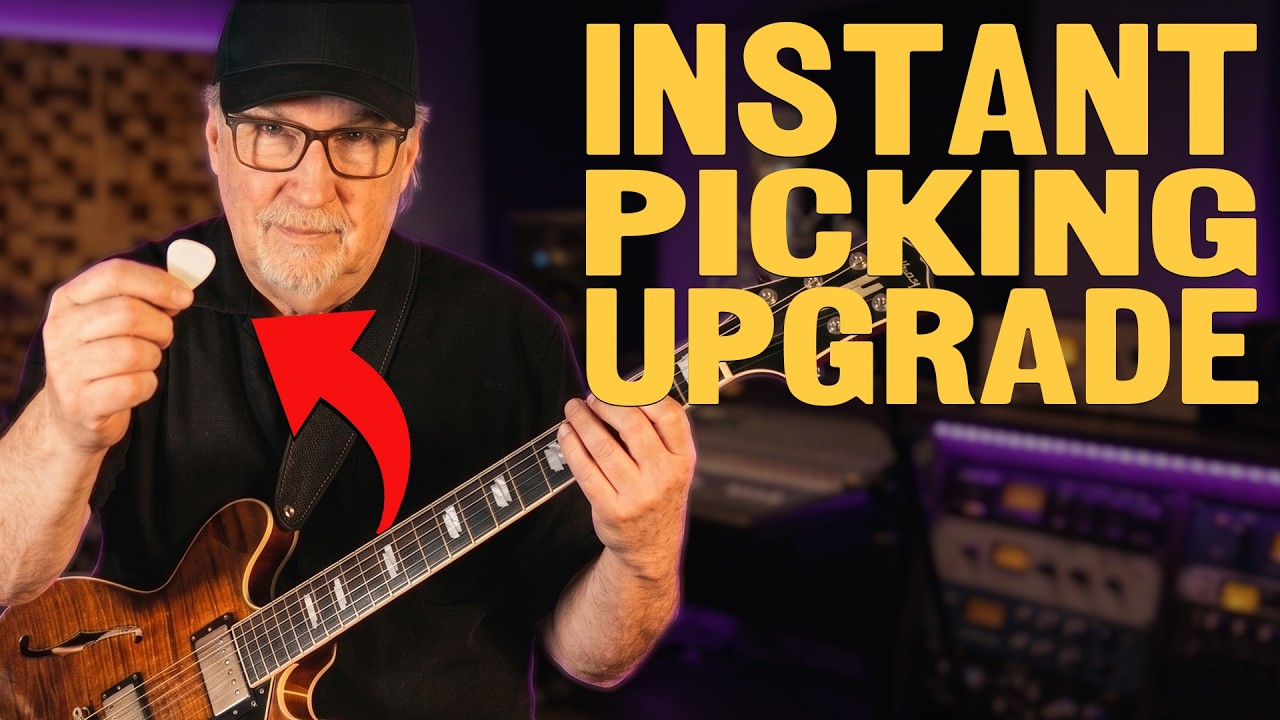
How To Master Rhythm Guitar Playing - Supercharge Your Beat Sub Division [With Adam Levine]
![How To Master Rhythm Guitar Playing - Supercharge Your Beat Sub Division [With Adam Levine]](https://i.ytimg.com/vi/9POKJG6N8kI/maxresdefault.jpg)
► Watch the full lesson on YouTube
Rhythm guitar really comes down to one thing: dividing the beat. Master that, along with the secret of where to accent, and you'll play with the kind of pocket that makes people move.
What you'll learn
- Clap and accent on beats 2 and 4, never 1 and 3
- Rhythm guitar is dividing the beat: into 2 (eighths), 3 (triplets), and 4 (16ths)
- The pocket secret: accent beats 2 and 4 no matter the subdivision
- Use the shuffle strum (a triplet with the middle note left out) and ghost notes for feel
Dividing the beat
It drives musicians crazy to see people clap on 1 and 3, because the groove lives on 2 and 4. Everything in rhythm guitar comes down to dividing the beat, and Adam approaches the right hand like a drummer (the guitar really is a drum).
Take a quarter-note pulse (1, 2, 3, 4) and practice dividing each beat: into two (eighth notes, "one-and, two-and"), into four (sixteenth notes, the "Good and Plenty" rhythm), and into three (triplets: "one-trip-let" or "blueberry"). At first, just get really good at matching the beat exactly, with no flamming (no notes landing a hair early or late).
The secret to the pocket
Here's the near-secret to a real pocket: whatever your subdivision, accent beats 2 and 4. A beginner plays a flat, even "one-and-two-and" with no accents. But if you're strumming eighths (down, up, down, up) and you lean into the downstroke on beats 2 and 4 every time, the part suddenly has punch and sits in the pocket. Practice it against a metronome so you can hear exactly how you line up with the quarter-note pulse.
Ready to take this further? The Art of Rhythm Guitar
Adam's class on making the guitar groove: 50+ lessons filmed with a live trio, with a chart for every cue.
Triplets and the shuffle strum
Triplets tangle guitarists up: if you strum down-up-down for a triplet, your hand arrives ready to go up just when the next beat needs a downstroke, like patting your head and rubbing your belly. You can play every triplet with all downstrokes, but that's rare outside slow tempos or old 50s doo-wop.
What we usually use instead is the shuffle strum, which is based on the triplet but with the middle note left out ("one … three"). You play the first part, come up on the third, and that sets you up to come back down on the next beat. It sounds like a horse going over a wooden bridge. Train yourself to move freely between eighths, triplets, and sixteenths, then start ghosting and leaving out notes within a sixteenth-note feel. It's all just variations on dividing the beat.
For players ready to take this all the way, Adam lays out his complete professional system (rhythm, melody and harmony as one language) in The Method.
How well do you really know the fretboard?
Take the free Fretboard Challenge and see exactly which notes cost you time. Then get the note map that fixes them.
One email with the map. Unsubscribe whenever: no card, nothing to cancel.
On its way.
Check your inbox in the next minute or two. If it is not there, look in promotions.