Transform Your Guitar Playing with 4 Unique Techniques - How to use a guitar capo creatively
► Watch the full lesson on YouTube
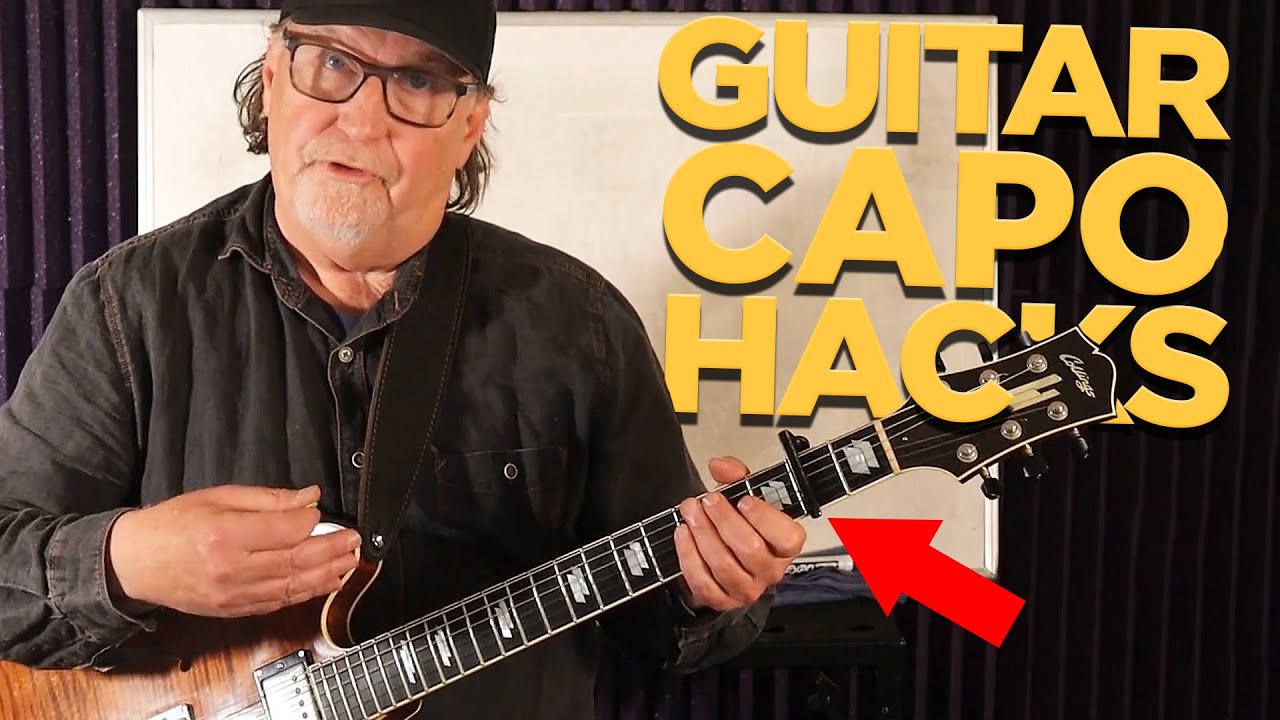
A capo can do a lot more than change keys. Adam shows four creative ways to use one, from a bright mandolin shimmer to layering two capo'd parts into one full, glistening sound.
What you'll learn
- Capo + CAGED shapes is the foundation: know where the root is so you know the real chord name
- Capo high (around the 7th fret) for a bright, chimy "mandolin" sound, great for layering and overdubs
- Use a capo to drop a song into an easier open-chord key (e.g., G shapes at the 3rd fret = B♭)
- Transpose with the two-row chromatic trick, then layer two capo'd parts for a full sound
1. The familiar way: change keys
The most familiar use is simply clamping the capo behind a fret and playing as usual. Put it behind the 2nd fret, play a C shape, and you're actually sounding a D chord. If you were with a piano player, you'd ask them for a D. One tip: don't over-tighten the capo, or it can pull the guitar sharp. And the shapes that work best with a capo are the CAGED shapes (C, A, G, E, D).
2. The mandolin sound
Move the capo up high (around the 7th fret and beyond) and play a CAGED shape up there for a bright, chimy, mandolin-like sound; a touch of overdrive makes it sing (it's "Here Comes the Sun" territory). The key is knowing where the root sits in your shape, so you know the real chord: a D shape capoed up high might actually be an A chord. These high capo parts add beautiful shimmer when you layer them live or overdub a second or third guitar in the studio.
Ready to take this further? The Academy
Go deeper with monthly live workshops, study guides and a community of serious players.
3. Lower a song into an easy key
Sometimes a song is in a tough key (F, B♭, or just too high for your voice) and you want open-position chords instead. Say a tune in C is too high and you want B♭. From the CAGED shapes, G is close to B♭ (G, G♯, A, B♭), so capo the 3rd fret, play G shapes, and you're in B♭. Now you can fingerpick those open-style chords with all their ring.
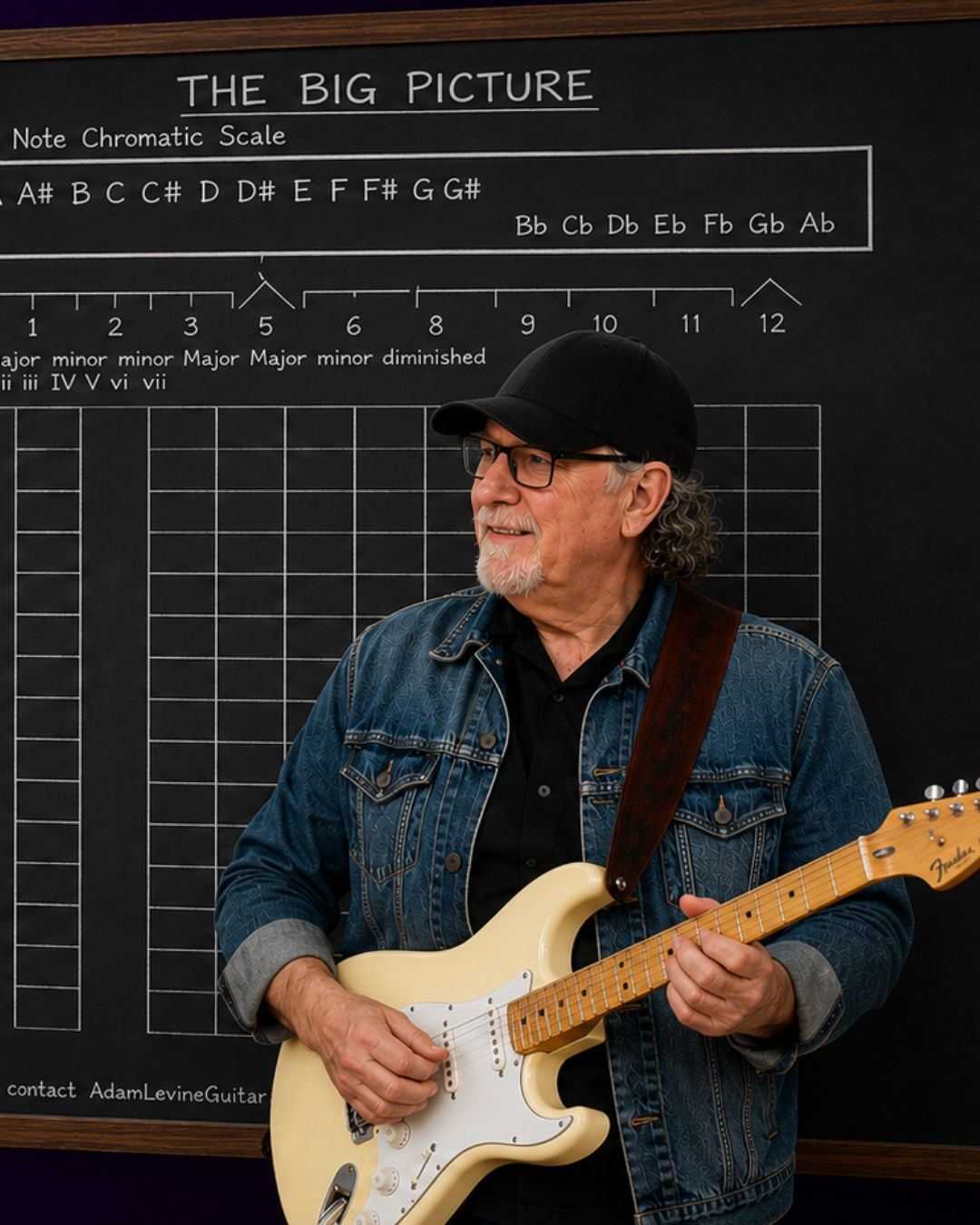
That requires transposing, and Adam's "Poor Man's Guide" makes it easy: draw two rows of twelve blocks. In the top row write the original key's chromatic scale starting on its root (C, C♯, D…). Directly beneath, aligned, write the chromatic scale of the shape you're using (G, G♯, A…). To transpose any chord, find its root in the top row and read the note directly below it, keeping the chord type, so a C13♯11 becomes a G13♯11. Perfect for when a singer at rehearsal needs the song dropped a few half steps on the fly.
4. Layer two capo'd parts
Adam's favorite: overlay two capo'd guitar parts in different areas of the neck for a full, shimmering sound. Take a I-IV like D to G. For the lower layer, capo the 2nd fret and play a C shape (sounding D) to an F shape (sounding G). For the upper layer, capo the 7th fret and play a G shape (sounding D) to a C shape (sounding G). Let the progression go around once, then bring in the second layer: two guitars ringing together, and with bass and drums under it, a genuinely big sound.
How well do you really know the fretboard?
Take the free Fretboard Challenge and see exactly which notes cost you time. Then get the note map that fixes them.
One email with the map. Unsubscribe whenever: no card, nothing to cancel.
On its way.
Check your inbox in the next minute or two. If it is not there, look in promotions.