
Free · in Adam's Academy
The Progression Lab
Write any chord progression and hear it played back with a strum pattern, swing, and a drummer behind you.
Try it in the Academy → How to use it
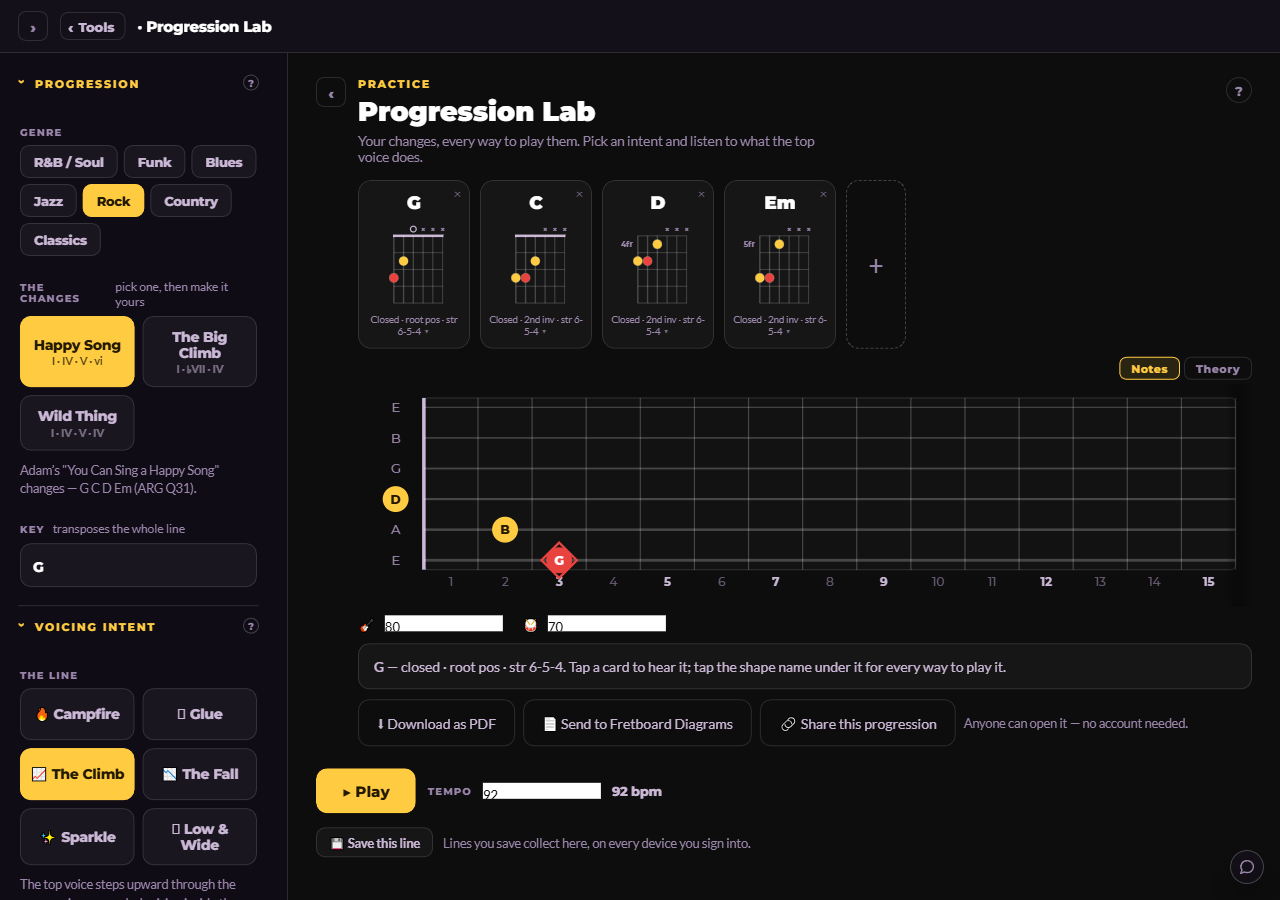
Tim's brief for this tool was one sentence: put up any chord progression and hear every way to play it. So the screen is a line of chord cards you can hear. Type a progression or take a preset, press Play, and it loops with a strum pattern and a drummer (the metronome's own voices) behind it.
Every card opens into the full menu of ways to play that chord: open grips, barres, closed and open triad voicings. And the intent presets choose voicings so the top voice does something on purpose (climbs, falls, or holds still), because that top voice is the melody a listener actually hears.
Who it is for. Songwriters, rhythm players, and anyone who has a progression in their head and wants to hear it before they can play it.
What opens it. Look and listen free: ten minutes a day to try any progression. Changing chords, voicings and the band comes with the membership.
How to use it
- 1
Put up a progression
Type the chords (G, Am, C, D) or pick a preset from the genre lists: pop, folk, rock, jazz, blues, country and more. Each preset comes with a note on where it comes from. The cards appear in a line, one per chord.
- 2
Press Play and set the band
The line loops. Under the cards: tempo, swing, the strum pattern and the drum groove, all on one clock and all changeable while it plays. Turn the guitar or the drums up and down to hear one against the other.
- 3
Open a chord card
Press any card and it opens into every way to play that chord: open grips, the barre shapes, the Triad Trainer's closed and open voicings on each string set. Pick one and the line plays it that way.
- 4
Give the line intent
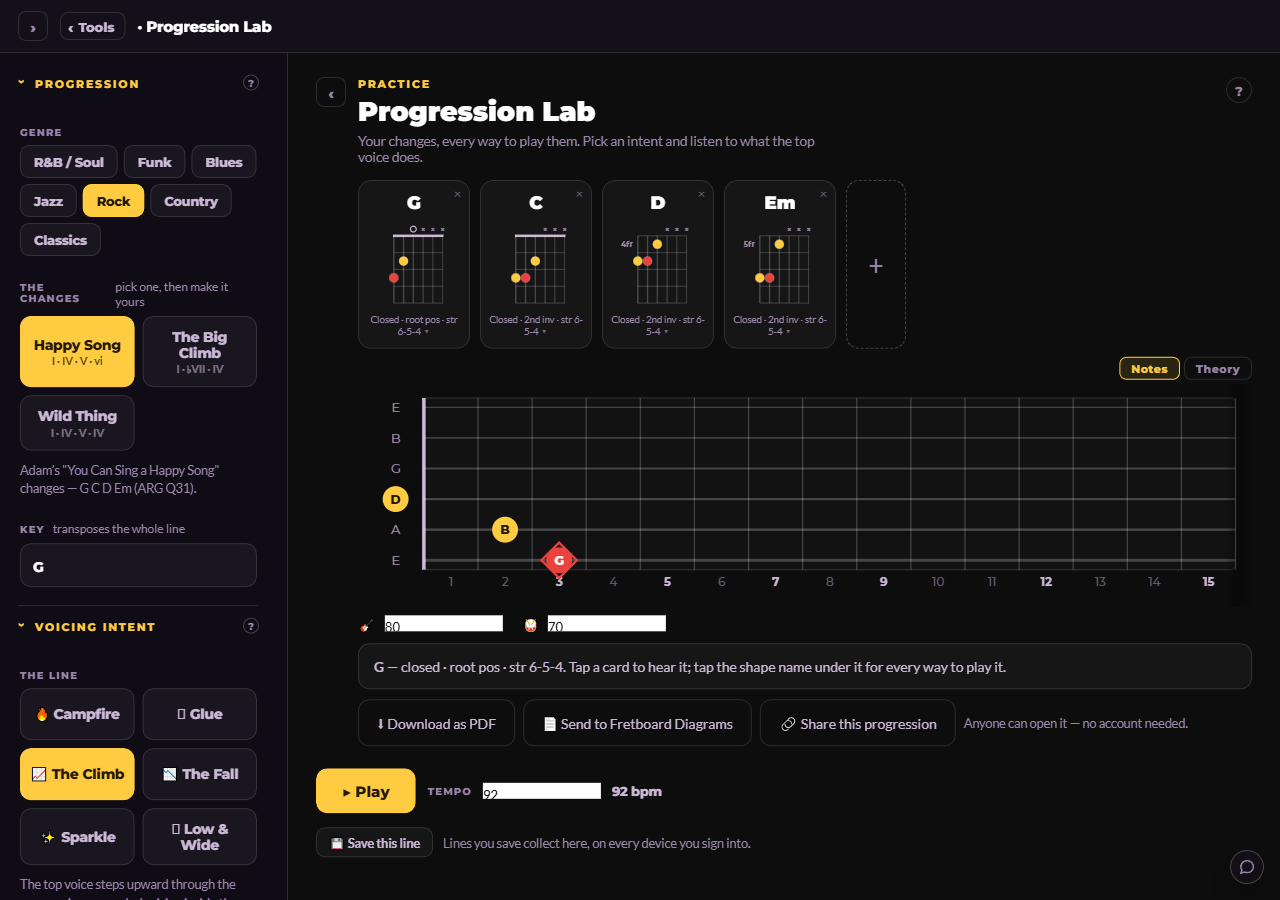
The Climb picks voicings so the top note steps upward through the progression. The Fall walks it down. Glue barely moves it. Try each on the same four chords and hear how much the top voice decides.
- 5
Change a chord, swap a note
Change any chord in place, add or remove cards, and the voicings follow the intent. Dot labels can read as intervals or note names, so you see the third moving as well as hear it.
- 6
Take it with you
Download a practice sheet: the progression with a chord box for each card. Send it to Fretboard Diagrams to build a full handout from it. Share the line and anyone can open it and press Play.
Adam's tips
- Play the line with Glue first and listen to how little moves. Then The Climb. The difference is what arranging is.
- Set the drummer to a groove you cannot yet play, and strum along until you can.
- Take a song you are learning and put its chords in. Hearing the loop at a slow tempo tells you where the changes are before your hands get there.
- Write a line in the key you sing in, then open each card and pick the voicings that sit under your voice rather than on top of it.
Questions people ask
- What does the free version let me do?
- Any progression, any preset, played back with the band, for ten minutes a day. Changing voicings, intents and the band comes with the membership.
- What chords does it understand?
- Major, minor, sevenths, sixths, suspended, diminished and augmented in every key: the chords the Triad Trainer and the diagram tool know. Extended jazz symbols belong to the lead-sheet tool coming later.
- Can I hear a single chord?
- Press the card. Press a dot to hear one note.
- Where do the shapes come from?
- The same tables the Fretboard Diagrams and the Triad Trainer use, so a shape you see here is the one you would print there.
Try it now
Look and listen free: ten minutes a day to try any progression. Changing chords, voicings and the band comes with the membership.
Open Progression Lab in the Academy → What the membership includes
Already a member? Go straight to the tool.
Share this guide
The caption and the teaser below are written to be lifted as they are.
Type four chords. Press Play. Hear them with a strum and a drummer, then open any chord and pick from every way to play it. The Climb, The Fall and Glue move the top voice on purpose. That is the Progression Lab, in Adam's Academy.
Hear the progression before you can play it
The Progression Lab turns any chord progression into a line you can hear, with a strum and a drummer, and opens every chord into every way to play it. The intent presets show why the top voice is the melody people hear. Here is how to use it.
The video walkthrough
Coming soon. It follows this script, about 1.6 minutes.
- 10sOpen. Tools, Progression Lab. Type G, A minor, C, D. Press Play.
- 15sThe band. Tempo, swing, strum, drummer. All live while it plays. Turn the guitar down and hear the drums alone.
- 20sOpen a card. Press the C. Every way to play it: open, barre, triads on each string set. Pick one.
- 25sIntent. Glue barely moves. The Climb steps the top note up. The Fall walks it down. Same four chords.
- 15sTake it with you. Download the practice sheet. Send it to Fretboard Diagrams. Share the line.
- 10sInto the Academy. Look and listen free, ten minutes a day. The whole lab comes with the membership.
The other tools
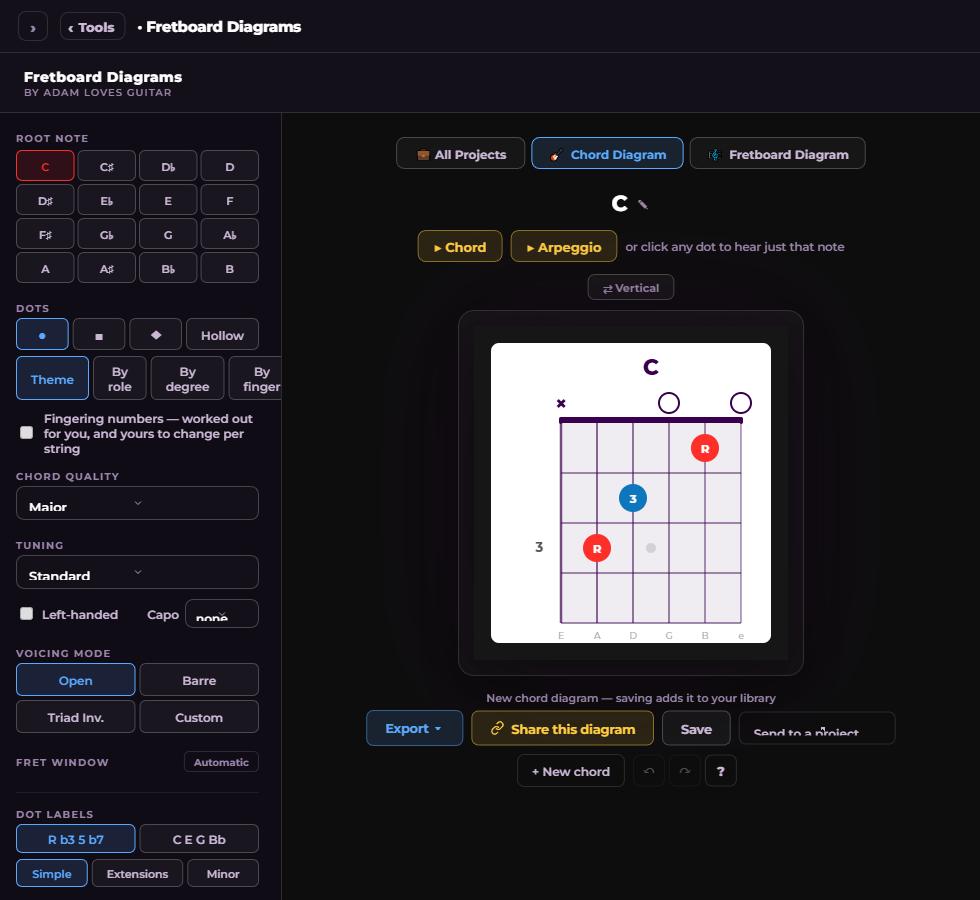 Fretboard DiagramsBuild any chord voicing or fretboard map Adam teaches, and lay them out into practice sheets you can print, share and hand to a student.
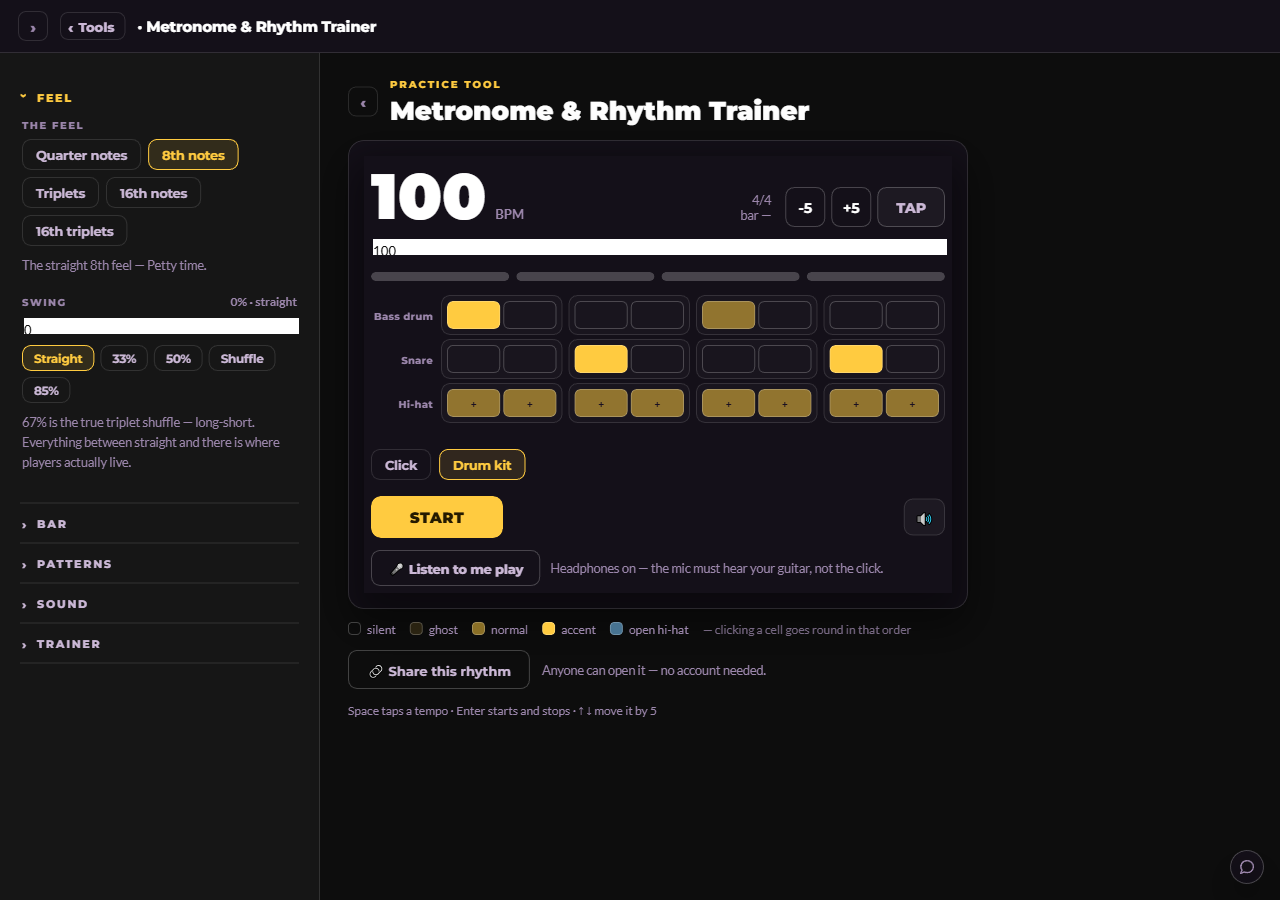 The Metronome & Rhythm TrainerA metronome that swings, plays odd meters, brings a drum kit, and listens back to check whether your time is actually solid.
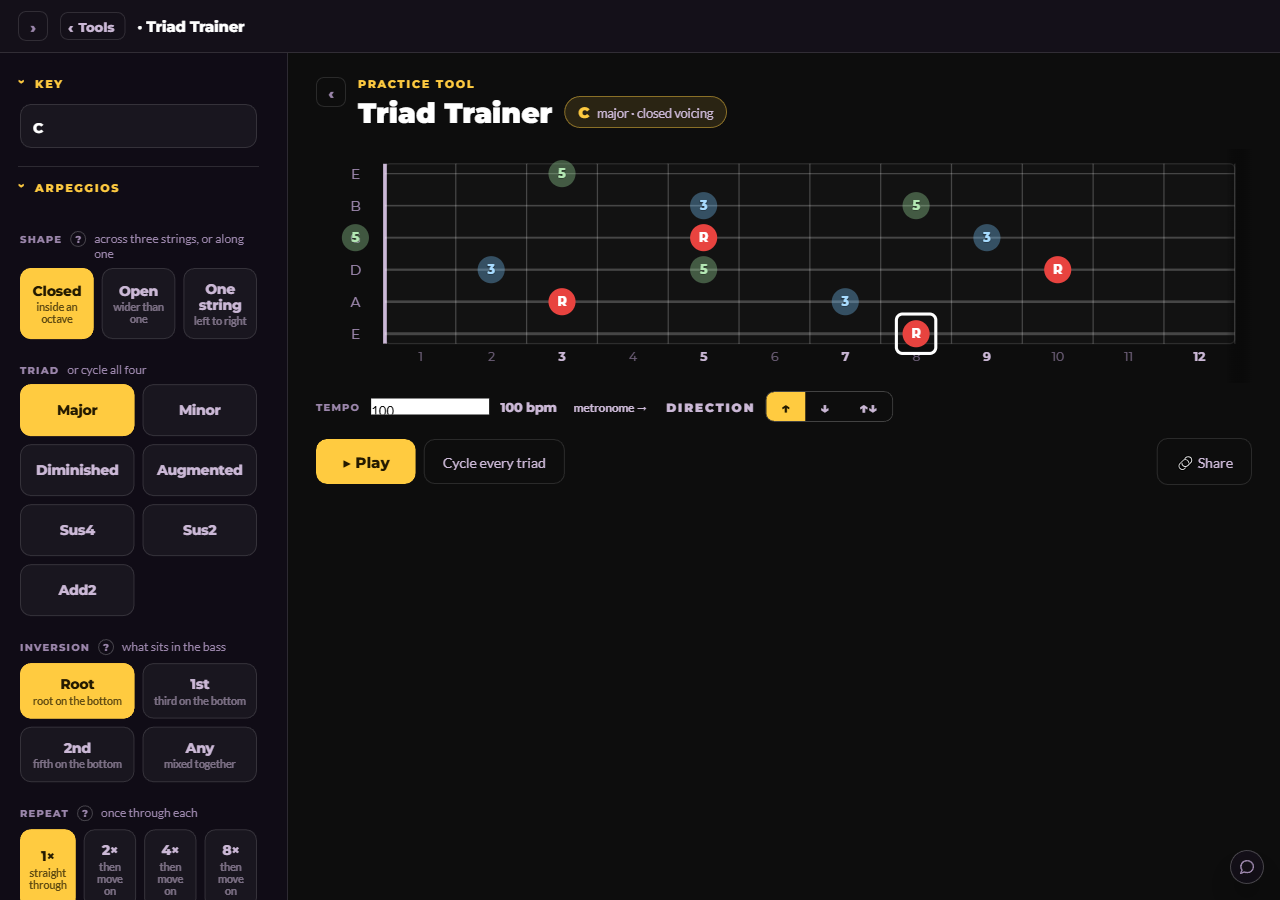 The Triad TrainerTriads everywhere on the neck: every key, every inversion, closed and open voicings, and along a single string.