
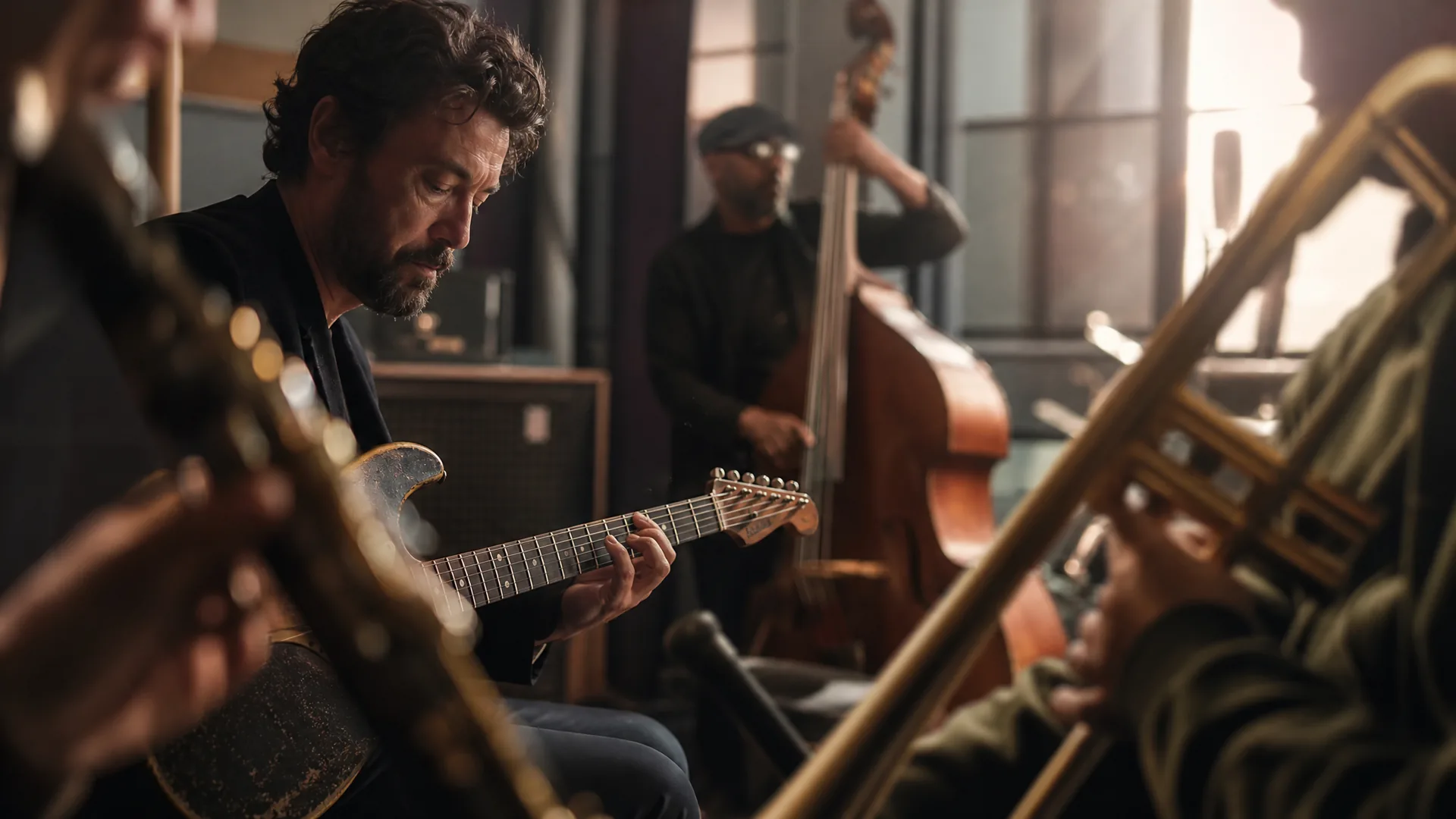
The Motown guitarist's influence on modern music is hiding in plain sight, buried under bass lines, horns, and vocal performances so powerful that most listeners never look deeper. That's the trap. If you've spent years chasing tone, technique, and complexity, the Motown guitar records are a direct challenge to everything you think makes a great player. The best guitar work on those tracks is nearly impossible to hear in isolation. That was entirely the point.
The Invisible Art: What Motown Guitar Style Actually Was
Most guitarists grow up worshipping soloists. Clapton, Hendrix, Page, the model is heroic, prominent, and loud. Motown guitar style is the opposite. It is supportive, groove-locked, and harmonically intelligent. The guitar's job was to lock the pocket, color the arrangement, and then get out of the way.
This is harder than soloing. Anyone can fill space. Filling space correctly, with the right voicing, the right rhythmic placement, the right amount of nothing, requires a level of musical understanding that most players never develop.
The Pocket, Not the Solo
"Playing in the pocket" means placing your rhythmic hits in precise relationship to the beat, not exactly on it, and not randomly around it. Motown rhythm guitar sits slightly behind the beat on slower grooves, creating a relaxed, pulling sensation. On up-tempo tracks, it sits tight and ahead, generating urgency without rushing.
This is a deliberate placement decision. It's a studied, repeatable skill, more than a matter of feel, and it's the foundation of groove guitar playing in any genre.
Restraint as a Conscious Decision
Restraint on a Motown record was surgical. Every muted strum, every omitted chord tone, every silent bar was a compositional choice. The guitarists understood that the human voice needed space, and they protected that space the way a good rhythm section protects the tempo.
This is the same phrasing economy that defines great blues guitar, the discipline of knowing what to leave out. In Motown, that discipline was operating at an industrial level, across hundreds of sessions, under extreme time pressure.
The Session Guitarists Who Built the Sound
The Funk Brothers, the house band at Hitsville U.S.A. in Detroit, played on more number-one hits than the Beatles, Elvis Presley, the Rolling Stones, and the Beach Boys combined. That fact is documented in the 2002 film Standing in the Shadows of Motown. Most people don't know their names. That anonymity was the job.
Robert White, Joe Messina, and Eddie Willis
Robert White wrote one of the most recognized instrumental figures in pop history with the opening guitar riff on the Temptations' "My Girl" (1964). It uses a handful of notes. It never competes with the vocal. It sets the harmonic and emotional frame for everything that follows, then steps back. That's mastery of studio guitar recording, where every note is permanent and every excess note costs the song.
White's chord work relied heavily on open-voiced partial chords: stripped-down voicings in place of full barre chords, which let the arrangement breathe. Remove the third or fifth, place the remaining notes where they don't clash with the horns or keyboard, and you have a texture that supports without crowding.
Joe Messina brought a different discipline: muted rhythm precision. His damped strumming patterns created a percussive, staccato texture that functioned almost as a second snare. Tight right-hand muting, consistent pick attack, exact rhythmic placement. The guitar became a rhythm instrument first, a harmonic instrument second.
Eddie Willis locked with the kick drum on tracks like "Ain't Too Proud to Beg," using muted, forward-leaning strums that gave the groove momentum without harmonic clutter. Most guitarists lock to the snare. Willis understood that locking to the kick created a different kind of propulsion, one that pushed the song forward from the foundation.
What the Funk Brothers Understood About Their Role
"The guitar chair at Motown wasn't about who could play the most, it was about who understood the song well enough to disappear into it. That's a level of musicianship most players never develop because nobody teaches it.", Adam Levine, Adam Loves Guitar
Adam Levine played in Motown-era studio sessions. The discipline he witnessed and practiced there became the cornerstone of what he has taught for over 50 years. He watched the Funk Brothers make real-time compositional decisions while they played their parts. That distinction matters: session guitar techniques at Motown were acts of musical intelligence.
Motown Guitar Techniques You Can Steal for Any Genre
Motown guitar style travels well beyond its genre. Every technique those players used applies directly to studio guitar recording in 2026, pop, country, indie, R&B, folk, jazz. The methods transfer because they address the fundamental problem of how a guitar coexists with other instruments and a human voice.
How well do you really know the fretboard?
Take the free Fretboard Challenge and find out exactly which notes cost you time, then get the note map that fixes them.
One email with the sheet. Unsubscribe whenever. No card, nothing to cancel.
On its way.
Check your inbox in the next minute or two. If it is not there, look in promotions.
Playing in the Pocket: Groove Guitar Playing Fundamentals
Three concepts drive pocket playing:
1. Rhythmic placement. Train yourself to place rhythm guitar hits slightly behind the beat on slower tempos, and tight-to-on-top for up-tempo grooves. Record yourself with a metronome, then listen back. Most intermediate players are ahead of the beat more than they realize.
2. Dynamic control. A consistent pick attack across a full strum often overpowers the rest of the arrangement. Motown rhythm guitarists varied attack intensity within a single bar, harder on the backbeats, lighter on the upstrokes. The result sounds even but breathes.
3. Strategic silence. Pick whole bars where the guitar plays nothing at all. This is what it actually means to play guitar with feel: understanding that space is punctuation.
Chordal Storytelling Over the Bar Line
Motown guitarists played through the changes, using partial voicings and rhythmic phrasing to create phrases that told a small story across two or four bars.
The technique: choose a voicing that emphasizes a tension note on the first bar, resolve it on the second. Use the rhythm, not a note change, to signal the arrival. Let the vocal carry the melody; let the guitar carry the feeling underneath it. This is call-and-response phrasing applied to chord work.
Why Most Guitarists Miss the Lesson Hiding in These Records
The technically capable plateau player has optimized for the wrong things. Speed. Complexity. Range. These are measurable, so they get practiced. Restraint isn't measurable, so it gets ignored.
The real reason technically solid players stop growing is that they've been solving the wrong problem. Motown guitarist influence is a direct corrective. Those players were hired because they made every record better. The record was the product. The guitarist served the record.
That mindset shift is a big one. It requires choosing what to play versus reacting to muscle memory, active intention on every beat, in service of something larger than your own part. Most players have never been asked to operate that way. Most teachers have never demanded it.
How to Apply the Motown Mindset to Your Own Playing
Active Listening as a Practice Tool
Pick one Motown track. "My Girl." "Ain't Too Proud to Beg." "I Heard It Through the Grapevine." Play it through once without your guitar. Just listen.
Now listen again with headphones and focus exclusively on the rhythm guitar. You'll need to work to hear it, it's buried in the mix by design. Write down what you notice: when it plays, when it stops, where the hits land relative to the snare, what voicing feels like it's being used. Training your ear to hear what the guitar is really doing on those records is itself a technical skill, and it's one most players skip entirely.
Transcribe the guitar part down to its rhythmic skeleton, just the rhythm, no notes. Then rebuild it in a different genre context. Use those rhythmic placements under a country chord progression. Use that pocket approach on an indie pop track. The techniques transfer. The genre is just the clothes.
From Motown Influence to Your Own Musical Voice
The paradox of studying Motown session guitarists is this: the more deeply you absorb their discipline of restraint, the more your own voice emerges. A player who has never learned to hold back has no real control over what they say. A player who has mastered when not to play is finally ready to say something.
How restraint becomes the foundation of a personal voice is a technical development arc. Constraint forces choice. Choice reveals personality. Personality, repeated and refined over time, becomes style.
The Funk Brothers didn't sound like each other. White, Messina, and Willis each brought a distinct personality to the same shared discipline. That's the model: internalize the constraints, then make decisions that only you would make inside them.
What formal training actually gave the Motown session players their edge was the vocabulary to understand what a song needed and the discipline to deliver exactly that, nothing more.
If you want to work directly with someone who sat in those sessions and brought this discipline back into the teaching room, you can learn directly from a guitarist who played those sessions. The lesson lives inside a teacher who was actually there.
